
Birdy bird - Game Original
RectfyArcade
4.6304.00 Reviews
- Version
- 5.3.1
- Installs
- 1.00M
- Age Rating
- Everyone
Screenshots
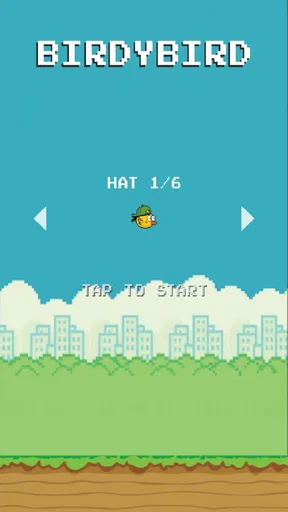
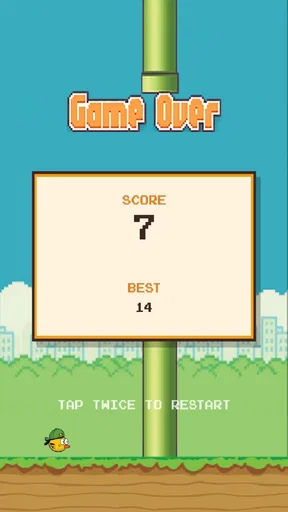
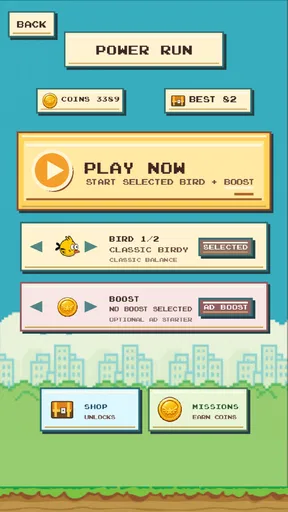
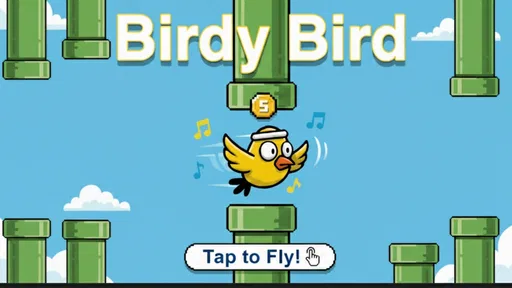
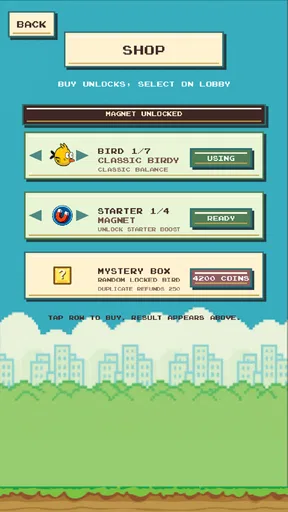
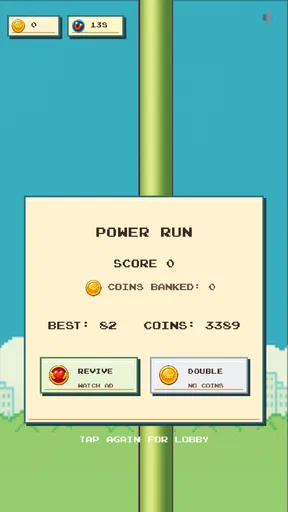
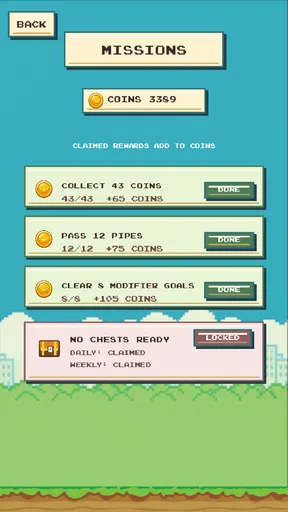
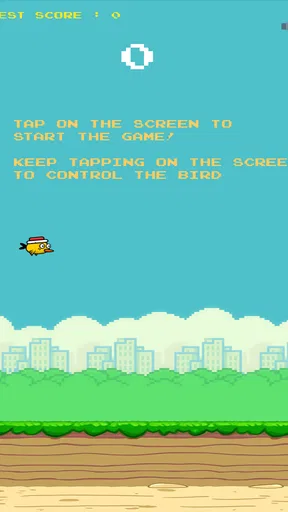
Our Review of Birdy bird - Game Original
 Analysis by Appyee
I expected Birdy bird - Game Original to be a quick distraction, and that is exactly where it works best. It is a simple arcade game from Rectfy in which I guide a bird through gaps between pipes, relying on timing rather than a complicated control system. The idea is immediately understandable, but the small margin for error makes each attempt feel more demanding than the cheerful presentation suggests.
After spending time with it, my opinion is fairly clear: this is a good choice when I want a compact reflex challenge that I can start and stop without preparation. It is less convincing as a game I would play continuously for long sessions. Its lasting value depends on whether I enjoy repeating the same basic action to improve my own consistency. If that personal-score loop appeals to me, the simplicity becomes a strength. If I need varied stages, progression, or a broader set of activities, the novelty fades quickly.
How the first sessions feel
The opening experience is refreshingly direct. I do not have to learn a collection of buttons or understand a large menu before playing. The bird’s movement is the entire conversation between me and the game: I tap to keep it airborne, watch the approaching pipes, and try to pass through the available spaces without touching them. That clarity makes it suitable for a spare moment, especially when I want something that can be understood almost instantly.
The difficulty comes from the gap between understanding the rule and executing it reliably. A tap that feels slightly early or late can ruin an otherwise promising run. I found myself adjusting rhythm rather than searching for a hidden trick. That makes the early appeal personal: the game does not need a long tutorial to become challenging, because the challenge is built into precision and concentration.
During the first week, the strongest reason to return is the desire to do a little better than before. A failed attempt is short enough that restarting does not feel like a major commitment. This creates a useful loop for waiting rooms, short breaks, or those moments when I want to occupy my hands without beginning a large game. The same design can also be frustrating, since a run can end just as I feel settled into its rhythm.
A practical way to play
I get better results when I treat each attempt as a rhythm exercise instead of tapping in a panic. Watching the bird’s position relative to the next opening helps me make smaller, more deliberate inputs. I also try not to chase an impressive run immediately after a mistake. Taking a brief pause between attempts keeps the game from turning into a sequence of increasingly hurried taps.
That small habit is one of the more useful discoveries here. Because the controls are so limited, improvement comes from attention and restraint rather than from unlocking a stronger bird or collecting a special ability. Players who enjoy learning a narrow mechanical skill may appreciate that honesty. Players who expect the game to reward them with new tools may find the experience bare.
The game is rated for Everyone, which matches the straightforward premise and easy-to-understand control. I would still describe the experience as more appealing to people who enjoy repetition than to very young players looking for a story or a changing set of activities. The age label makes it broadly approachable, but it does not change the fact that the central task can become demanding once I try to maintain a clean run.
What makes it different from larger arcade games
Compared with modern arcade alternatives filled with missions, unlockable characters, daily objectives, and visual effects, this game is deliberately narrow. That can feel refreshing because there is little friction between opening it and playing. I am not asked to understand a progression map before I can enjoy the core challenge.
The trade-off is obvious after the initial curiosity. Other arcade games can give me several reasons to return: a new mode, a changing environment, a collection to complete, or a rotating objective. Here, the main reason is still the flight through the pipes and the satisfaction of improving execution. It is closer to a compact reflex test than to a large entertainment package.
That distinction matters when deciding whether to keep it installed. If I want a familiar challenge that fits around daily activities, its small footprint in my attention is valuable. If I am choosing only one arcade game for regular evening play, I would probably prefer an option with more variety. Birdy bird is strongest when simplicity is the feature, not when simplicity is expected to carry an entire long-term game library.
Does it keep its place after the novelty?
I find its staying power depends less on how often I play and more on whether I still enjoy measuring small improvements against my own previous attempts. A practical way to keep the loop fresh is to set a different focus for each brief session—steady timing one day, staying composed after a near miss the next—then stop when concentration slips. That approach makes it easier to tell whether the game is still a satisfying reflex exercise or simply a familiar routine.
The month-to-month question
After the first excitement settles, the game becomes a test of personal motivation. There is no need to maintain a complicated routine, learn multiple systems, or remember a long chain of objectives. I can return after several days and understand the play immediately. That low re-entry cost is a real advantage for a casual game.
At the same time, the lack of broader variety means my reason for returning does not evolve very much. I am still trying to control the same bird through the same type of obstacle. For some players, that purity is exactly what makes a classic arcade format replayable. For me, it works in short bursts, but I would not expect it to replace a more varied game over the course of a month.
The published response suggests that the format has found a substantial audience: it has passed a million installs and holds an average rating of 4.5 from around fifteen thousand ratings. Those figures do not guarantee that every player will enjoy the repetition, but they do fit my impression that the basic loop is easy to approach and satisfying for people who like quick, score-focused challenges.
My own month-to-month use would be occasional rather than habitual. I would keep it available for a commute, a short break, or a moment when I want a game with no learning curve. I would not open it expecting a new experience each time. Its recurring value comes from testing my timing again, not from presenting fresh content.
Who will find lasting value
This is a good match for someone who enjoys chasing personal improvement. The game gives that player a clean target: make fewer mistakes, stay calm, and extend the run. It can also suit people who dislike games that demand frequent attention outside the play session, because the core activity is self-contained and easy to leave behind.
It is less suitable for anyone who needs narrative momentum, long-term character development, or a sense of discovery. I would also hesitate to recommend it as the main game for a child who quickly loses interest when the environment stays familiar. The Everyone rating describes accessibility, not guaranteed variety.
A useful compromise is to treat it as one small tool in a larger rotation. I might play it for a few minutes before switching to a puzzle game, a platformer, or another arcade title with different objectives. In that role, its simplicity prevents it from becoming demanding. Expecting it to provide the depth of a full-featured game is where disappointment is most likely.
How much maintenance it demands
The maintenance burden is pleasantly low. I do not need to remember a complex build, manage a collection, or plan a route through a campaign. Returning after a break requires almost no preparation. The current version is 5.2.8, and the game supports Android 6.0 or later, so compatibility is aimed at a wide range of devices that are not running very old software.
That said, low maintenance does not mean zero friction. The game asks me to supply the variety myself through changing my goals. One session can be about warming up my timing, another about staying composed after a near miss, and another about simply passing a few minutes. If I always approach it with the same expectation of beating a score, the routine can become stale.
The free entry also makes it easy to try without committing money upfront. Optional in-app purchases range from $0.49 to $4.99 per item. I would not consider spending necessary to understand or enjoy the central challenge, so I would begin with the free experience and decide later whether any optional purchase genuinely improves my use. For a minimalist arcade game, keeping spending intentional matters because extra payment does not automatically create deeper gameplay.
There is another kind of maintenance to consider: attention. The controls may be simple, but successful play requires concentration. I would not describe it as a relaxing background game if I am trying to achieve a strong run. It is better suited to active, short focus than to passive entertainment while I am doing something else.
Where fatigue starts
The main source of fatigue is repetition without a change in objective. Once I understand the timing, the game’s appeal depends heavily on whether I enjoy refining that timing. A player who likes score chasing can interpret repetition as practice. A player who wants surprise may interpret the same repetition as a lack of content.
Failure can add to that fatigue. Because the action is so simple, a lost run can feel like my mistake is fully exposed. There is no complicated system to blame and no alternate strategy that transforms the situation. That directness is satisfying when I improve, but it can become irritating when several attempts end in similar ways.
I also found that long sessions are less attractive than short ones. The game’s format naturally encourages “one more try,” but the emotional reward of each attempt can flatten if I continue after my concentration has dropped. My practical advice is to stop while the challenge still feels sharp. A short break often preserves the appeal better than forcing a high score through frustration.
Another limitation is that the experience may feel too close to familiar pipe-dodging arcade games for players seeking originality in mechanics. The presentation may be friendly and approachable, but the lasting test remains the same basic flight pattern. I would choose it for accessible execution, not because I expect a large mechanical surprise.
Small decisions that improve the experience
First, I recommend using short sessions with a specific intention. Rather than playing indefinitely, I might decide to focus on smooth taps or on avoiding rushed reactions. This turns a repetitive loop into a small practice exercise and gives each session a clearer purpose.
Second, I would avoid judging the game by the first few failed attempts. The control is easy to describe but not necessarily easy to perform consistently. Giving myself time to recognize the bird’s movement makes the experience fairer. The important adjustment is not tapping faster; it is learning when a small input is enough.
Third, I would use the game as a reset between demanding tasks, not as a replacement for a varied game. Its short, self-contained structure is useful when I want a mental change of pace. If I am already tired or impatient, however, the precise timing can make the break feel like another task. Choosing the right moment is part of getting value from it.
Finally, I would keep purchases optional in my own decision-making. Since the game is free to start and its defining challenge is already clear, I would first see whether I return naturally over several days. If I do not, paying for an item is unlikely to solve the underlying issue, which would be a mismatch with the repetitive format rather than a missing feature.
My long-term verdict
Birdy bird - Game Original earns a place as a lightweight arcade option, but not as an all-purpose game. Rectfy has focused the experience on a single, recognizable skill: guiding a bird safely through pipes with well-timed taps. That focus makes the game approachable, quick to restart, and easy to fit into ordinary breaks.
I would recommend it to a friend who likes classic score challenges, short attempts, and the quiet satisfaction of improving through repetition. The free price makes trying it straightforward, the Everyone rating keeps its premise broadly accessible, and the large install base shows that the format has clear appeal. The Android requirement of version 6.0 or later also keeps it available to many users.
I would not recommend it to someone looking for a campaign, frequent content changes, or a game that remains surprising after many sessions. Its maintenance is simple because there is little to manage, but that same simplicity limits the reasons to return. The optional purchases, priced from $0.49 to $4.99 per item, should be treated as extras rather than a solution for players who need more variety.
My final view is that it survives the novelty test in a modest way. I would keep it installed for occasional reflex practice and quick downtime, not because it becomes richer over time, but because it remains immediately playable. Its lasting value comes from repeatable skill, not expanding content. If that is the kind of arcade habit I want, this small game can stay useful; if I want a changing world or a deeper progression system, I would move on to a more substantial alternative.
Verdict
Strengths of Birdy bird - Game Original
- Simple controls make it easy to start playing immediately.
- Short rounds are ideal for quick breaks or casual sessions.
- The retro-style presentation gives the game a nostalgic feel.
- Increasing difficulty keeps the basic gameplay challenging.
- Lightweight design should run well on many mobile devices.
Limitations of Birdy bird - Game Original
- Gameplay can feel repetitive after extended play sessions.
- High difficulty may frustrate players seeking a relaxed experience.
- Limited variety may reduce long-term replay value.
- Ads may interrupt play in the free version.
- Progress can depend heavily on precise timing and repeated attempts.
Similar Picks in This Category
View All
Subway Surfers
SYBO Games4.6

Stickman Party 234 MiniGames
PlayMax Game Studio4.6

Subway Princess Runner
Ivy4.4

Temple Run
Imangi Studios4.2

Zombie Tsunami
Mobigame SAS4.6

Stack Ball - Crash Platforms
CASUAL AZUR GAMES4.5
Frequently Asked Questions
What is Birdy bird - Game Original, and how is it played?
Birdy bird - Game Original is a simple arcade-style game focused on guiding a bird through obstacles while trying to achieve the highest possible score. The controls are generally easy to understand, making it suitable for quick sessions. However, the timing can become challenging quickly, so success depends on concentration, practice, and learning how the bird responds to each tap or touch.
Is Birdy bird - Game Original suitable for children and casual players?
The game is easy to start and does not usually require previous gaming experience, which makes it accessible to casual players and children. Its straightforward objective can be understood quickly, although some sections may feel difficult for younger users because precise timing is important. Parents should also review the app’s age rating, advertising, and privacy information before allowing children to download it.
Does Birdy bird - Game Original work without an internet connection?
A game built around short arcade challenges may be playable offline, which is convenient when traveling or when mobile data is unavailable. Nevertheless, certain features—such as advertisements, analytics, online leaderboards, updates, or promotional content—can require an internet connection. We recommend launching the game once while connected and checking which functions remain available after switching to airplane mode.
Are there advertisements or in-app purchases in Birdy bird - Game Original?
Before downloading, users should check the current store listing for information about advertising and optional purchases, since these details can change between versions and platforms. Free arcade games commonly use ads to support development, and some may offer purchases to remove advertising or unlock extras. Review the payment settings carefully, especially if the device is used by children.
What should I check before installing Birdy bird - Game Original on Android or iOS?
Before installation, confirm that your device meets the game’s current operating-system requirements and has enough free storage for the app and future updates. It is also worth checking the developer name, recent user reviews, permissions, privacy policy, and the date of the latest update. These details can reveal whether the game is actively maintained and whether it suits your expectations.
Play our best games!


